
Why Grain-Free Pet Food Took Over, and Why It’s Now Questioned
When I bought my first “grain-free pet food” dog food years ago, it felt like the smartest choice. The packaging promised high protein, “ancestral diets,” and better digestion. It looked premium, cost premium, and seemed healthier. But as new research from the FDA and major veterinary bodies emerged, I learned that the marketing was far more convincing than the science. Today in 2025, grain-free food is one of the most misunderstood dog nutrition trends—one that has sparked major debate among veterinarians, researchers, and dog owners. This guide breaks down what grain-free really means, why it became controversial, and how to make the right feeding decision for your dog.
Table of Contents
What Grain-Free Actually Means
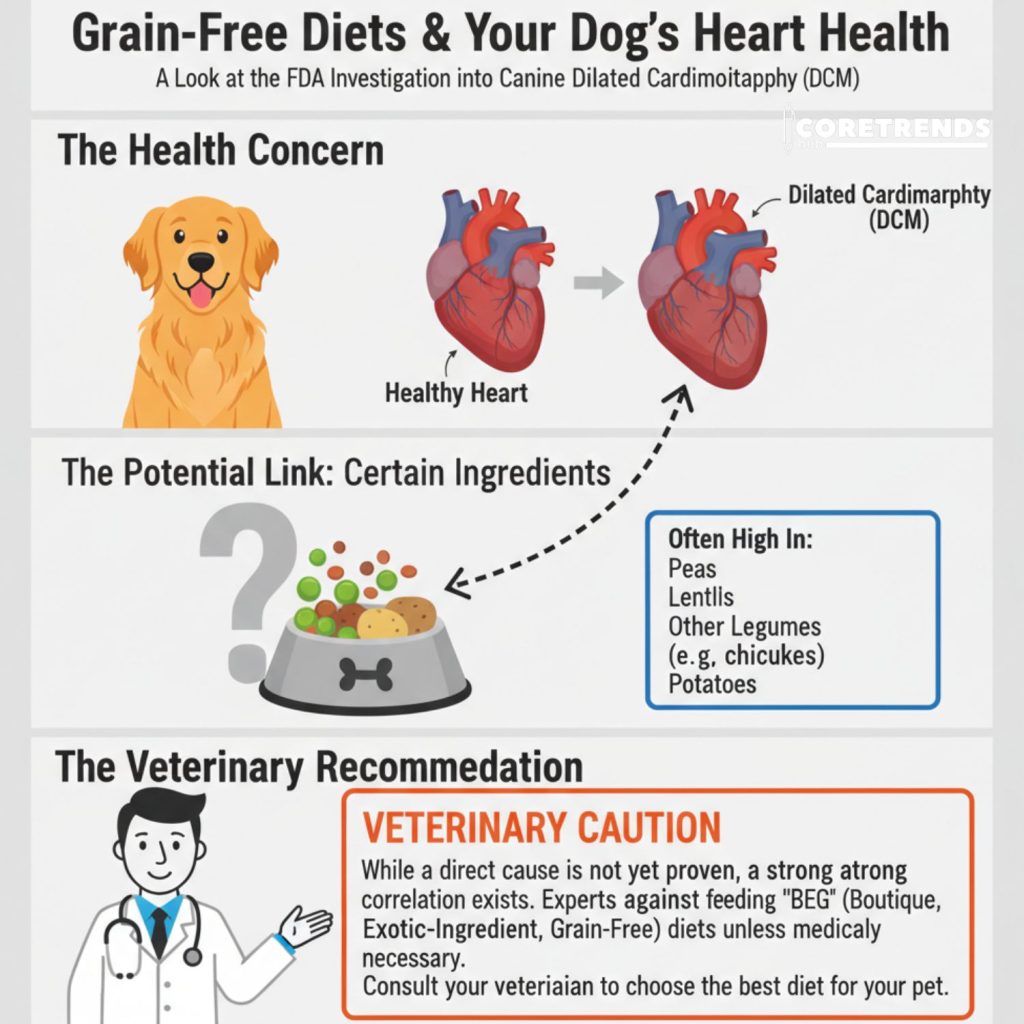
A grain-free diet simply excludes common grains such as corn, wheat, rice, barley, and oats. Instead, these formulations replace grains with other carbohydrate sources—usually potatoes, peas, lentils, chickpeas, or tapioca. According to the American Veterinary Medical Association, this shift doesn’t inherently make the food higher in protein or healthier. Grain-free diets became fashionable because they sounded more “natural,” but dogs are omnivores whose digestive systems can process grains without issues. Understanding these substitutions is crucial before assuming grain-free equals better.
The Rise of Grain-Free Diets
The grain-free trend exploded after pet food marketing emphasized “ancestral diets,” claiming dogs should eat like wolves. Companies leaned on emotional branding, not research. Many owners believed grains caused allergies—even though true grain allergies are extremely rare.
Why Grain Replacements Matter
When grains are removed, something must replace them. Most grain-free diets rely on legumes and potatoes, which later became the center of scientific concern. What replaces grains matters more than what gets removed.
The Scientific Concerns Behind Grain-Free Foods
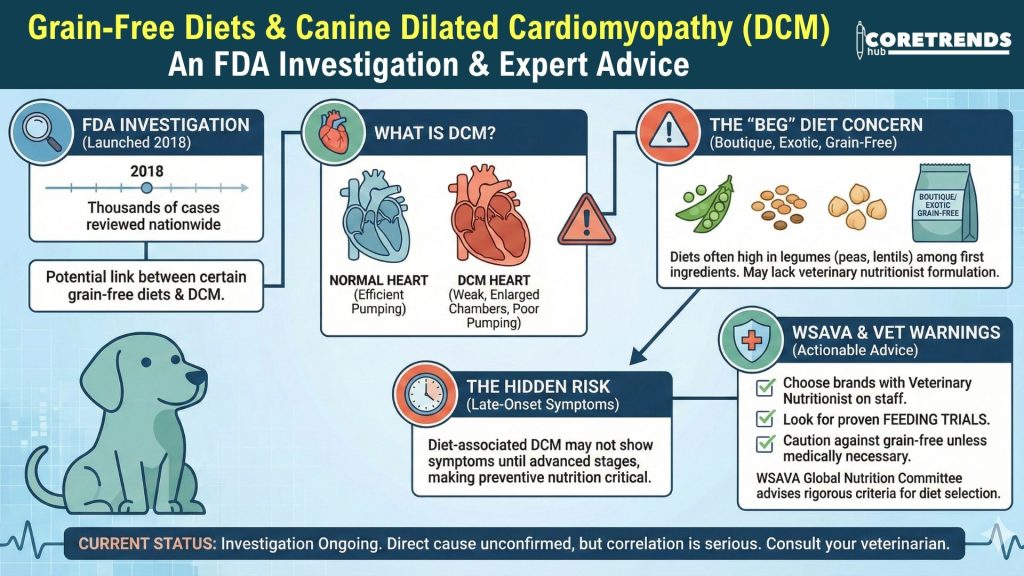
In 2018, the FDA launched an investigation into a potential link between certain grain-free diets and Canine Dilated Cardiomyopathy (DCM). This wasn’t a minor issue—it was a nationwide review involving thousands of cases. Researchers noticed that many affected dogs had been eating grain-free diets high in legumes. Although the investigation is ongoing, the scientific concern is serious enough that veterinarians now caution against grain-free foods unless medically required.
FDA Investigations Into DCM
The FDA found that many diets associated with DCM were boutique, exotic-ingredient, or grain-free, often containing peas and lentils among the first ingredients. While a direct cause isn’t confirmed, the correlation is concerning enough that pet cardiologists strongly encourage caution.
WSAVA & Vet Warnings
The WSAVA Global Nutrition Committee advises choosing brands with veterinary nutritionists on staff and proven feeding trials. Many grain-free boutique brands failed to meet these criteria. WSAVA experts warn that diet-associated DCM may not show symptoms until late, making preventive nutrition critical.
Benefits of Grain-Free Diets (When They’re Appropriate)
Despite the controversy, grain-free diets are not “bad” by default. They are incredibly helpful and sometimes necessary—but only for the right dogs. Grain-free makes sense for dogs with confirmed allergies, inflammatory bowel disease, or other dietary sensitivities diagnosed by a veterinarian. According to VCA Animal Hospitals, true grain allergies make up less than 1% of food allergies. Most allergies relate to proteins like beef, dairy, or chicken, not grains.
True Allergies vs. Misunderstandings
Most owners assume itching or digestive issues come from grains. In reality, proteins cause the majority of food reactions. Grain-free can be beneficial in rare, diagnosed grain allergies—not as a general rule.
Why Some Dogs Thrive Grain-Free
Dogs with sensitive stomachs or unique digestive issues may respond better to certain grain-free formulas. For these dogs, grain-free is a therapeutic choice, not a trend.
Should You Switch Back to Grains?
For most dogs, yes—returning to a high-quality, grain-inclusive diet is not only safe but often healthier. Whole grains like brown rice, oats, barley, and sorghum provide fiber, essential nutrients, and steady energy. The Cornell University College of Veterinary Medicine notes that grains support digestive health when minimally processed and included appropriately.
Whole Grains and Digestibility
Dogs have evolved enzymes that allow them to digest grains effectively. Whole grains provide antioxidants, fiber, and vitamins that support gut function and stool quality.
Dogs Are Not Wolves — Biology Explained
Modern dogs split from wolves thousands of years ago. Studies cited by Tufts Veterinary Nutrition show dogs have gene variations that help them digest starches far better than wolves can. The “wolf diet” marketing is a myth.
How to Choose the Right Dog Food in 2025
Start with brands that follow the strict nutritional guidelines recommended by AAFCO, WSAVA, and board-certified veterinary nutritionists. Choose foods labeled “Complete & Balanced” for your dog’s life stage. Look for whole proteins first, moderate carbohydrates, and avoid formulas overloaded with legumes—especially if grain-free. Consult your veterinarian before switching diets, and transition slowly over 7–10 days.
Conclusion — Making the Right Choice for Your Dog
After years of navigating food trends, labels, marketing buzzwords, and emerging research, I’ve learned one lesson: there is no “perfect” diet—only the right diet for your dog. Grain-free may be appropriate in certain medical cases, but grain-inclusive diets are backed by decades of safety and research. When you rely on science instead of slogans, you make choices that protect your dog’s heart, health, and future.
FAQ — Quick Answers for Owners
Q: Are all grain-free diets unsafe?
No. They are appropriate for dogs with medically diagnosed allergies.
Q: What grains are best?
Brown rice, oats, barley, and sorghum offer excellent digestibility.
Q: Can grain-free cause heart disease?
Some grain-free diets have been linked to DCM according to the FDA, but research is ongoing.
Q: Should I consult a vet before switching?
Yes—especially if your dog has allergies or digestive issues.