When I brought home my first puppy, I was overwhelmed with joy—and, honestly, completely confused about my puppy vaccination. Every vet visit felt like a blur of medical terms, boosters, timelines, and diseases I had never heard of. If you’re feeling the same, you’re not alone. In 2025, a proper puppy vaccination schedule is more important than ever, especially with rising cases of parvovirus, respiratory infections, and regional outbreaks across the U.S. This guide breaks down exactly when your puppy needs each vaccine, why they matter, and how to keep your pup protected from life-threatening diseases. With expert insights from leading veterinary sources, this is the only vaccination roadmap you’ll ever need as a new dog parent.
Table of Contents
Why Puppy Vaccination Matter
Vaccinations are the foundation of lifelong puppy health. They prevent infections that can cause severe illness, long-term complications, or even death. According to the American Veterinary Medical Association, vaccines work by priming your puppy’s immune system to recognize and fight harmful pathogens before they cause damage. Puppies are especially vulnerable because their immune systems are still developing and maternal antibodies fade quickly. Missing or delaying key vaccines—especially distemper or parvovirus—can be dangerous. An appropriate vaccination schedule ensures your puppy builds immunity at the right pace, receives protection during critical growth stages, and has the best defense against preventable diseases.
The Window of Vulnerability
From birth to 16 weeks, puppies go through a stage where their maternal immunity declines. During this period, they are most vulnerable to infections. Vaccines given in a series ensure immunity builds as maternal protection fades. Experts at the American Animal Hospital Association (AAHA) recommend strict timing during this window to ensure complete immunity.
Core vs. Non-Core Vaccines: What’s the Difference?
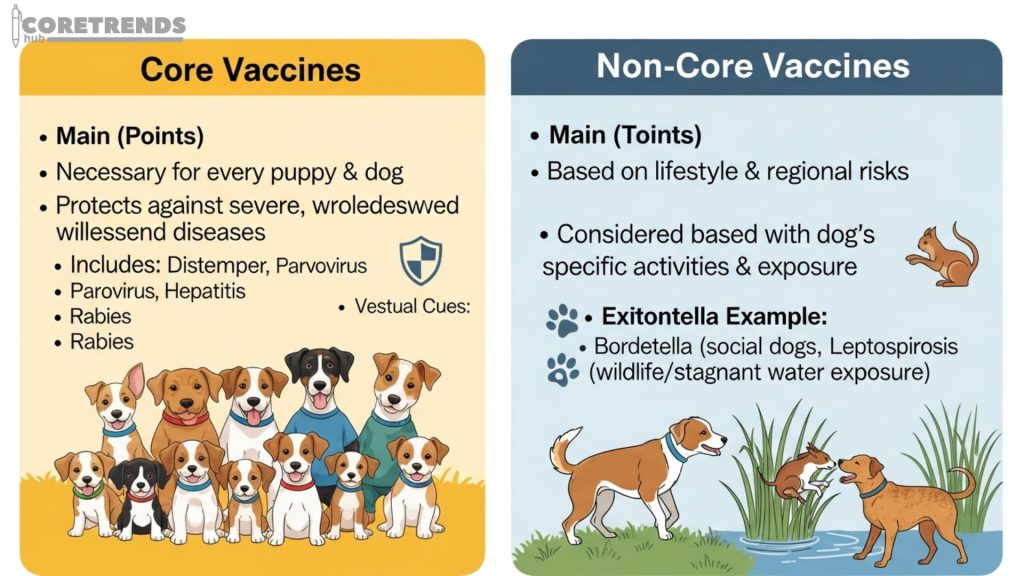
Vaccines fall into two categories: core and non-core. Core vaccines are necessary for every puppy regardless of breed, size, or lifestyle. They protect against severe, widespread diseases like distemper, parvovirus, hepatitis, and rabies. Non-core vaccines, on the other hand, are based on lifestyle and regional risks—such as Bordetella for social dogs or Leptospirosis for dogs exposed to wildlife or stagnant water. According to the WSAVA Vaccination Guidelines, understanding this difference prevents over-vaccination while ensuring essential protection. Your veterinarian will help tailor the ideal plan.
Why Core Vaccines Are Non-Negotiable
Core vaccines address deadly, highly contagious diseases found across the U.S. Even indoor puppies need them due to environmental exposure, dog parks, and wildlife contact. Skipping any core vaccine puts your dog at serious risk.
Puppy Vaccination Schedule by Age
A proper vaccine schedule follows specific age milestones because your puppy’s immunity changes quickly in the first six months. Missing or delaying one dose can compromise immunity, which is why consistency matters. Below is the standard 2025 recommended schedule, based on guidance from AAHA and leading veterinary universities.
6–8 Weeks: First Round
- DHPP (Distemper, Hepatitis, Parvovirus, Parainfluenza)
This first shot introduces your puppy’s immune system to the most dangerous viruses. Many breeders administer this before adoption. - Optional: Bordetella (for social puppies)
10–12 Weeks: Second Round
- DHPP booster
Boosters strengthen the immune response initiated by the first shot. - Optional: Leptospirosis for dogs in humid or wildlife-heavy areas.
14–16 Weeks: Third Round
- DHPP final booster
This is the most critical parvovirus protection your dog will receive. - Rabies (required by U.S. law in all states except HI)
16–20 Weeks: Optional Add-Ons
Depending on your puppy’s lifestyle, your vet may recommend:
- Canine Influenza
- Lyme vaccine (tick-prone regions)
- Lepto final booster
1 Year: Adult Booster
Your dog will receive:
- DHPP booster
- Rabies booster
After this, your vet will schedule yearly or triennial boosters depending on local regulations and vaccine type.
Diseases Puppy Vaccines Prevent
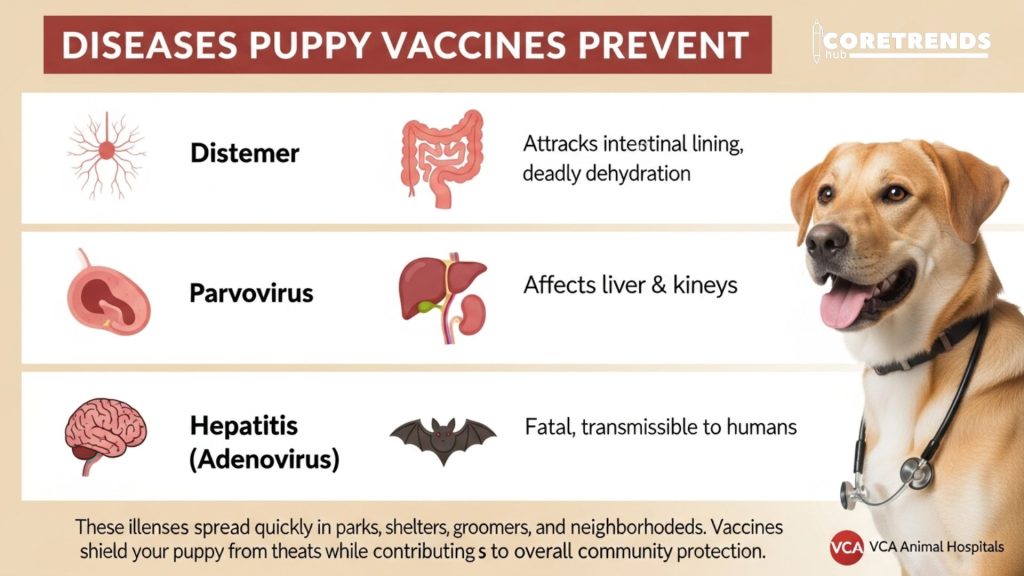
Understanding what vaccines protect against helps you appreciate their importance. Distemper attacks the nervous and respiratory systems. Parvovirus destroys the intestinal lining, leading to deadly dehydration. Hepatitis (adenovirus) affects the liver and kidneys. Rabies is fatal and transmissible to humans. These illnesses spread quickly in parks, shelters, groomers, and neighborhoods. According to VCA Animal Hospitals, unvaccinated puppies have a significantly higher hospitalization and mortality rate. Vaccines shield your puppy from these threats while contributing to overall community protection.
Why Parvovirus Is the #1 Threat
Parvovirus remains one of the deadliest puppy diseases. It spreads through soil, paws, shoes, and surfaces—and can survive for months. Treatment is costly and intensive. Vaccination is the only reliable protection.
Lifestyle-Based Vaccines
Not every puppy needs every vaccine, which is why lifestyle assessment matters. Dogs who travel, socialize, hike, swim, or live near wildlife may require added protection. For example, Leptospirosis is common in warm, rainy states. Bordetella is a must if your puppy attends daycare or groomers. Lyme protection is important in tick-heavy regions like the Northeast. Your vet will help you decide based on climate, location, and activities.
How Your Puppy’s Daily Life Influences Vaccine Needs
Walking in forests, playing in dog parks, visiting lakes, or living in apartments with shared pet spaces all increase exposure risks. Lifestyle vaccines fill these gaps in protection.
How to Prepare Your Puppy for Vaccination Visits
Vet visits can be stressful for puppies. Before appointments, make sure your puppy is calm, has eaten recently, and has had some playtime to reduce anxiety. Bring treats, a comfortable carrier, and your puppy’s health records. Most vets recommend gradually introducing puppies to car rides and gentle handling to create positive associations. During the visit, comfort your puppy with praise and soft petting. A calm puppy is easier to examine and less reactive to injections.
Aftercare Tips for Vaccinated Puppies
Mild fatigue or soreness at the injection site is normal. Encourage water intake, offer gentle rest, and monitor for rare reactions like swelling or vomiting.
Possible Side Effects & When to Call the Vet
Most puppies experience little to no side effects, but mild symptoms like sleepiness, reduced appetite, or slight swelling can occur. These typically resolve within 24 hours. Rare but serious reactions—such as facial swelling, persistent vomiting, difficulty breathing, or hives—require immediate veterinary attention. The AAHA notes that allergic reactions are uncommon but can occur in small-breed puppies or those with sensitive immune systems. Always monitor your puppy after vaccinations.
Understanding Normal vs. Concerning Symptoms
Normal: mild lethargy, soreness, reduced appetite.
Concerning: breathing difficulty, collapse, severe swelling, continuous vomiting.
Err on the side of caution—when unsure, call your vet.
Conclusion
After raising several puppies and researching every vaccine carefully, I’ve learned that a proper vaccination schedule is your puppy’s strongest shield against preventable disease. These early months shape your dog’s lifelong immunity, safety, and wellbeing. By following the recommended timeline, choosing appropriate lifestyle vaccines, and partnering closely with your veterinarian, you ensure your puppy grows into a healthy, confident adult. Vaccinations aren’t just a medical routine—they’re an act of love, responsibility, and long-term protection. With the right knowledge, you can give your puppy the safest possible start in life.
FAQ — Quick Answers for Puppy Parents
Q1: Can I walk my puppy before vaccinations are complete?
Only in safe, controlled environments—avoid public areas.
Q2: What if my puppy misses a booster?
They may need to restart the series. Consult your vet immediately.
Q3: Are vaccinations safe?
Yes. Serious reactions are extremely rare.
Q4: When is rabies required?
In most U.S. states, by 12–16 weeks of age.
Q5: Can vaccinated puppies still get sick?
Yes, but symptoms are typically much milder.