Ransomware has evolved from a nuisance affecting individual computers into a sophisticated, billion-dollar criminal enterprise that threatens businesses of every size, industry, and location. In 2026, ransomware attacks occur every 11 seconds globally, with the average ransom demand exceeding $2.3 million and total recovery costs often reaching five to ten times that figure when you factor in downtime, reputation damage, and regulatory penalties. Small and medium-sized businesses are increasingly targeted precisely because they typically lack the robust cybersecurity defenses that larger corporations maintain, making them attractive and vulnerable prey for criminal organizations operating with military-like precision. The terrifying reality is that modern ransomware doesn’t just encrypt your files—it steals sensitive data, threatens public exposure, disrupts operations for weeks, and can permanently destroy customer trust built over years of dedicated service. This comprehensive guide explains exactly how ransomware works in 2026, how cybercriminals infiltrate business networks, and most critically, the practical, actionable strategies you can implement immediately to protect your business from becoming the next victim. Whether you’re a five-person startup or a growing enterprise, the defenses outlined here can mean the difference between business continuity and catastrophic disruption.
Table of Contents
Understanding How Modern Ransomware Works
Modern ransomware has evolved into a sophisticated ecosystem far more dangerous than the simple file-encrypting viruses of the past. Today’s attacks typically involve multiple stages unfolding over days or weeks before the actual encryption occurs, giving attackers time to maximize damage and minimize your recovery options. The initial infiltration usually happens through phishing emails, compromised remote desktop connections, software vulnerabilities, or supply chain attacks targeting software your business uses. Once inside your network, attackers spend considerable time moving laterally—quietly exploring your systems, escalating privileges, identifying valuable data, and disabling backup systems that might facilitate recovery. This reconnaissance phase is deliberately stealthy, designed to avoid triggering security alerts while attackers position themselves for maximum impact. Ransomware-as-a-Service (RaaS) platforms have professionalized criminal operations, allowing technically unsophisticated criminals to license sophisticated attack tools from developers who take percentage cuts of ransoms collected. Double and triple extortion tactics have become standard—attackers encrypt files while simultaneously stealing data, threatening public release, and sometimes conducting distributed denial-of-service attacks to pressure payment. Understanding this sophisticated threat model fundamentally changes your defensive approach, moving from simple antivirus protection toward comprehensive, layered security strategies.\
Building Your First Line of Defense: Email Security
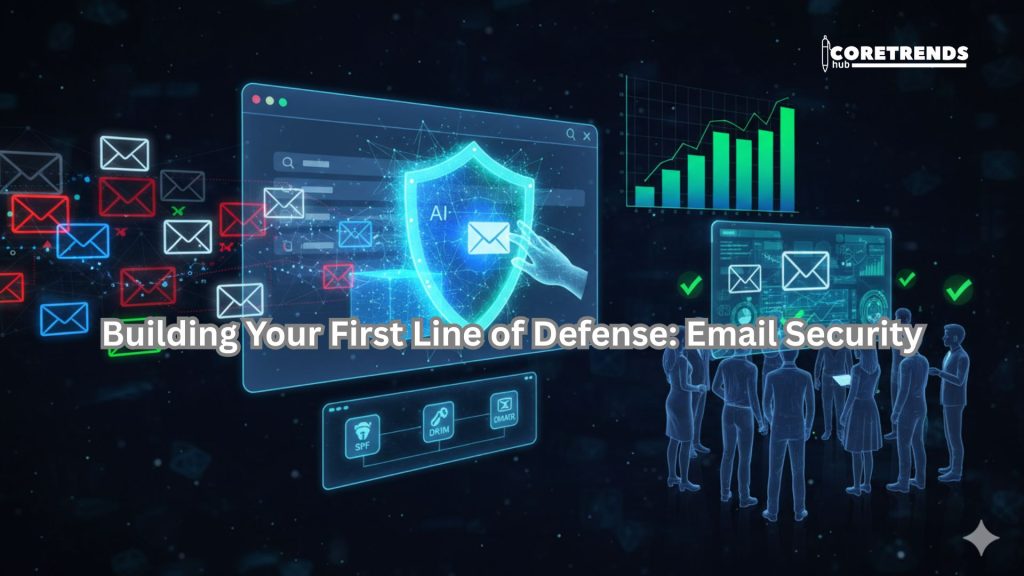
Email remains the primary entry point for ransomware attacks, with studies indicating over 90% of successful breaches beginning with phishing or malicious email attachments. Implementing robust email security creates an essential filter between criminal actors and your employees. Advanced email security platforms like Proofpoint, Mimecast, and Microsoft Defender for Office 365 use artificial intelligence to analyze incoming messages for malicious links, suspicious attachments, impersonation attempts, and behavioral anomalies that traditional spam filters miss. These systems evaluate sender reputation, analyze email content patterns, sandbox suspicious attachments in isolated environments before delivery, and rewrite URLs to route through security proxies that check destinations in real-time before users click. Beyond technology, employee training represents your most critical investment in email security. Regular phishing simulation programs send realistic fake phishing emails to your staff, measuring who clicks and providing immediate training for those who do. Employees who regularly practice identifying phishing attempts develop an instinctive skepticism that technology alone cannot replicate. Establish clear procedures for reporting suspicious emails, making it easy and rewarding rather than embarrassing for employees to flag potential threats. Implement email authentication protocols including SPF, DKIM, and DMARC that prevent attackers from impersonating your domain, protecting both your business and your partners from spoofing attacks that exploit your established reputation.
Multi-Factor Authentication as Essential Email Protection
Enabling multi-factor authentication on all email accounts eliminates the risk of credential theft enabling account compromise. Even if attackers obtain passwords through phishing or data breaches, MFA prevents unauthorized access. Implement authentication apps like Microsoft Authenticator or Google Authenticator rather than SMS-based verification, which remains vulnerable to SIM-swapping attacks that sophisticated criminals routinely exploit.
One of the simplest protections is using secure password management tools across your organization.
Securing Your Network Infrastructure
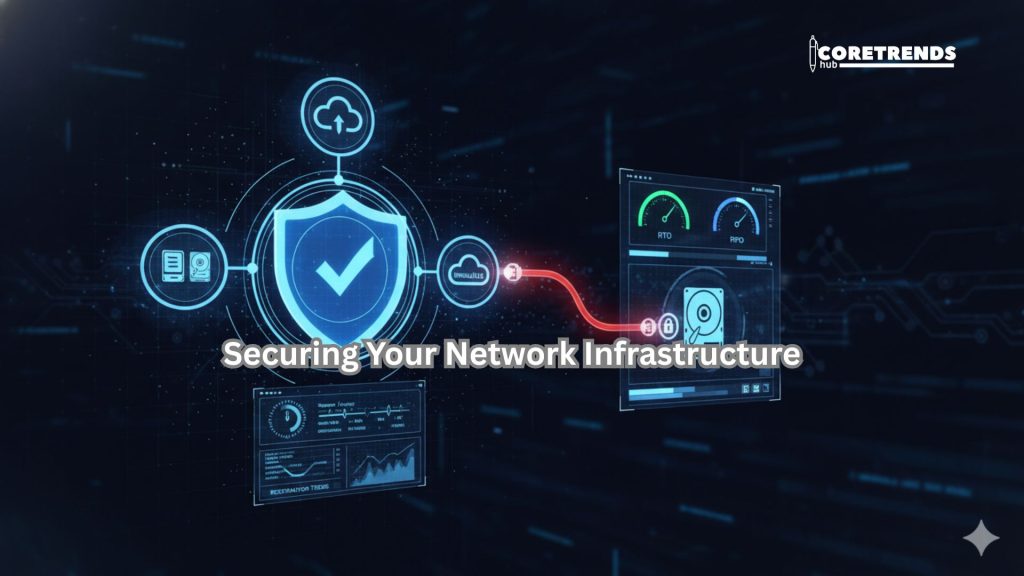
Your network infrastructure represents the interconnected highway system through which ransomware travels once it gains initial access, making network security critical to containing and preventing attacks. Network segmentation divides your infrastructure into isolated zones with controlled communication between them, preventing ransomware from spreading freely throughout your entire organization when it compromises a single system. Implement firewalls between network segments, restricting traffic to only what specific business purposes require. Remote Desktop Protocol (RDP), commonly used for remote administration, has become a primary ransomware entry point—disable it entirely when not needed, restrict access to specific IP addresses when required, and always protect it with multi-factor authentication and strong passwords. Virtual Private Networks (VPNs) encrypt remote access connections, but ensure you’re using modern, properly configured solutions with up-to-date software, as attackers specifically target outdated VPN vulnerabilities. Implement network monitoring tools that establish baselines of normal traffic patterns and alert when unusual activity occurs, such as large data transfers at unusual hours, connections to known malicious addresses, or lateral movement patterns suggesting internal reconnaissance. Intrusion detection and prevention systems examine network traffic for known attack signatures and suspicious behavioral patterns, blocking malicious activity before it reaches vulnerable systems. Regular network vulnerability scanning identifies misconfigurations, outdated software, and security gaps before attackers exploit them.
Implementing the 3-2-1-1 Backup Strategy
Comprehensive, properly implemented backups represent your most powerful weapon against ransomware—they transform an existential crisis into a manageable recovery process. The updated 3-2-1-1 backup strategy that cybersecurity experts recommend in 2026 goes beyond the traditional approach: maintain three copies of your data, on two different storage media types, with one copy offsite, and one copy completely offline or immutable. The offline or immutable copy is critical—ransomware specifically targets connected backups, encrypting or deleting them to eliminate recovery options and force payment. Cloud backup services like Veeam, Acronis, and Backblaze Business provide automatic, continuous backups with versioning that maintains multiple historical snapshots, allowing recovery to points before infection. Immutable storage options prevent modification or deletion of backup data even by administrators, ensuring attackers who compromise your systems cannot destroy your recovery lifeline. Equally important as creating backups is testing them regularly—many businesses discover their backups are incomplete, corrupted, or unrestorable only when facing actual disasters. Conduct quarterly restoration tests recovering complete systems from backups, documenting the time required and any issues encountered. Establish recovery time objectives (RTO) and recovery point objectives (RPO) defining acceptable downtime and data loss, then verify your backup strategy actually meets those targets. The psychological comfort of knowing you have verified, working backups fundamentally changes how you respond to ransomware attacks, enabling confident refusal to pay ransoms.
Separating Backup Credentials from Production Systems
Never use the same credentials for backup systems that you use for production environments. If attackers compromise your main administrative accounts, they should not automatically gain access to destroy your backups. Dedicated backup accounts with unique, complex passwords stored in separate password managers create this critical separation.
Endpoint Protection and Response Capabilities
Every device connected to your business network—laptops, desktops, servers, smartphones, and IoT devices—represents a potential ransomware entry point requiring robust protection. Traditional antivirus software relying on signature-based detection has become largely inadequate against modern ransomware that employs polymorphic code changing its signature with every infection. Next-generation endpoint protection platforms (EPP) like CrowdStrike Falcon, SentinelOne, and Microsoft Defender for Endpoint use behavioral analysis and machine learning to identify malicious activity based on what code does rather than what it looks like. These platforms monitor all system activity in real-time, detecting suspicious behaviors like mass file encryption, shadow copy deletion, or unusual privilege escalation that indicate ransomware execution even when specific malware signatures haven’t been seen before. Endpoint Detection and Response (EDR) capabilities add forensic investigation tools enabling security teams to understand exactly how attacks unfolded, what systems were affected, and how to remediate completely. Implement application whitelisting on critical servers, allowing only specifically approved software to execute and blocking everything else by default—this dramatically restricts attackers’ ability to deploy malicious tools. Ensure all endpoints have current operating system and software updates, as unpatched vulnerabilities provide easy entry points attackers routinely exploit. Mobile device management (MDM) solutions apply security policies to smartphones and tablets accessing business data, enabling remote wipe if devices are lost or compromised.
Privileged Access Management and Zero Trust Security
The principle of least privilege means every user account, application, and system should have only the minimum access permissions necessary to perform its specific function—nothing more. This fundamental security principle dramatically limits ransomware’s ability to spread when it compromises any single account. Audit all user accounts and permissions, removing administrative rights from standard user accounts and reserving elevated privileges for specific administrative tasks performed through dedicated accounts. Local administrator privileges on workstations are particularly dangerous, enabling ransomware to make system-wide changes and spread to connected systems; remove these from standard users immediately. Privileged Access Management (PAM) solutions like CyberArk and BeyondTrust provide secure vaults for administrative credentials, session monitoring for privileged activities, and just-in-time access granting elevated permissions only when needed rather than permanently. Zero Trust security architecture, increasingly adopted by businesses of all sizes in 2026, operates on the principle of “never trust, always verify”—every access request, regardless of whether it comes from inside or outside your network, must be authenticated, authorized, and continuously validated. Implementing Zero Trust involves strong identity verification for all users, device health checking before granting access, microsegmentation limiting lateral movement, and continuous monitoring of all access activities. According to Microsoft’s Security Intelligence Report, organizations implementing Zero Trust principles experience 50% fewer security breaches than those relying on traditional perimeter-based security models.
Implementing Conditional Access Policies
Conditional access policies automatically enforce security requirements based on user identity, device health, location, and behavioral factors. Configure policies requiring MFA for all access to sensitive systems, blocking access from unknown devices or suspicious locations, and automatically revoking sessions when risk signals indicate potential compromise. These automated policies enforce security consistently without relying on human judgment in every situation.
Incident Response Planning and Preparation
Having a tested, detailed incident response plan before an attack occurs can mean the difference between rapid recovery and catastrophic, weeks-long disruption. Many businesses dramatically underestimate recovery complexity, assuming they can figure it out under pressure—a dangerous misconception when every hour of downtime costs thousands of dollars and customer relationships deteriorate. Your incident response plan should document specific procedures for detecting ransomware, containing its spread, eradicating the infection, and recovering systems in priority order. Designate an incident response team with clear roles including technical lead, communications coordinator, legal counsel, and executive decision-maker authorized to make critical judgments quickly. Establish communication protocols for notifying employees, customers, partners, and regulators appropriately—many jurisdictions have mandatory breach notification requirements with strict timelines that violations can result in significant fines. Maintain offline copies of your incident response plan and critical technical documentation, as attackers who compromise your systems may destroy or encrypt these resources precisely to impede your response. Pre-establish relationships with cybersecurity incident response firms before you need them—negotiating contracts and completing onboarding during a crisis wastes precious time. Organizations like CISA (Cybersecurity and Infrastructure Security Agency) provide free resources, ransomware response checklists, and guidance that small businesses should study before incidents occur. Conduct tabletop exercises at least annually, walking your team through realistic attack scenarios to identify gaps in your plan and build muscle memory for coordinated response.
Cyber Insurance Considerations for Small Businesses
Cyber insurance has evolved from an optional luxury into a practical necessity for businesses that depend on digital operations and handle sensitive customer data. Policies cover financial losses from ransomware attacks including ransom payments, business interruption losses, data recovery costs, legal fees, regulatory fines, and crisis communication expenses. However, the cyber insurance market has tightened significantly as claims have skyrocketed—insurers now require demonstrable security controls before offering coverage and may deny claims when businesses fail to maintain promised security measures. Before purchasing cyber insurance, honestly assess your current security posture, as misrepresenting your defenses to obtain coverage can void policies precisely when you need them. Request quotes from multiple providers, carefully comparing coverage limits, exclusions, deductibles, and claims processes. Understand that most policies exclude acts of war—a contested category that insurers sometimes apply to nation-state attacks. Work with brokers specializing in cyber insurance rather than general business insurance agents who may lack the specialized knowledge to recommend appropriate coverage. Implement security improvements before applying, as better security posture translates to lower premiums and easier qualification. Review policies annually as your business grows and risk profile changes. Cyber insurance complements but never replaces strong security practices—it covers residual risk after you’ve implemented reasonable protections, not negligence or willful ignorance of obvious security requirements.
Creating a Security-Aware Company Culture
Technology alone cannot protect your business from ransomware—the human element remains both the greatest vulnerability and the most powerful defensive asset. Building a genuine security culture where every employee understands threats and takes personal responsibility for security transforms your entire workforce into a distributed defense network. Security awareness training should occur regularly rather than as annual compliance checkboxes, with engaging formats including video content, interactive simulations, gamified learning, and real-world examples that make abstract threats concrete and relevant. Communicate security policies clearly, explaining the reasoning behind requirements rather than issuing mandates without context—employees who understand why policies exist comply more consistently and make better judgment calls in novel situations. Create psychological safety around reporting security incidents or mistakes; employees who fear punishment hide mistakes, allowing attacks to progress undetected while situations that early reporting could have contained spiral into disasters. Recognize and reward security-conscious behaviors, highlighting employees who correctly identify phishing attempts or properly report suspicious activity. Executive leadership sets cultural tone—when executives visibly follow security policies and communicate their importance, employees throughout the organization receive clear signals about organizational priorities. Develop simple, memorable security guidelines employees can apply without consulting lengthy policy documents, focusing on high-impact behaviors like verifying unexpected requests through alternative channels, being suspicious of urgency, and never sharing credentials regardless of who asks.
Regular Security Assessments and Vulnerability Management
Even the most carefully designed security program develops gaps over time as your business evolves, new technologies emerge, and attackers develop novel techniques. Regular security assessments identify these gaps before attackers exploit them, providing prioritized roadmaps for continuous improvement. Vulnerability scanning tools like Tenable Nessus, Qualys, and Rapid7 InsightVM automatically scan your systems for known vulnerabilities, misconfigurations, and outdated software, generating reports prioritized by risk severity. Schedule scans at minimum monthly for critical systems and quarterly for less critical infrastructure. Penetration testing goes further by employing ethical hackers who attempt to breach your defenses using the same techniques real attackers use, revealing not just theoretical vulnerabilities but actually exploitable weaknesses in your specific environment. Annual penetration tests provide comprehensive assessments while more frequent targeted tests address specific concerns like new system deployments or significant configuration changes. Review security configurations regularly against established frameworks like the CIS Controls or NIST Cybersecurity Framework, which provide authoritative benchmarks for security best practices applicable to businesses of varying sizes. Third-party security assessments provide objective perspectives unclouded by organizational familiarity or assumptions, often identifying issues that internal teams overlook. Patch management processes must ensure identified vulnerabilities are actually remediated rather than simply documented—track patching completion rates and hold teams accountable for timely remediation of critical issues that ransomware attackers routinely exploit.
What to Do If You’re Hit by Ransomware
Despite your best preventive efforts, preparation for the possibility of a successful attack is a prudent component of any realistic security strategy. If ransomware strikes, your immediate response in the first hours determines recovery outcomes. Disconnect affected systems from your network immediately—physically unplug network cables and disable wireless connections—to prevent spread to unaffected systems. Do not turn off infected computers entirely, as volatile memory may contain encryption keys or forensic evidence valuable for investigation and recovery. Contact your incident response team, external cybersecurity firm, and cyber insurance provider simultaneously, activating your pre-established response plan. Preserve evidence by taking photographs of ransom notes, screenshots of affected systems, and maintaining logs of timeline and actions taken—this documentation proves essential for insurance claims, law enforcement cooperation, and forensic investigation. Report the attack to relevant authorities including the FBI’s Internet Crime Complaint Center (IC3) and CISA, who maintain databases of ransomware variants and may have decryption tools for specific strains. Evaluate payment decisions carefully with legal and cybersecurity counsel—paying doesn’t guarantee recovery, may fund further criminal activity, and could violate sanctions regulations if attackers are designated entities. Begin recovery from clean backups only after completely eradicating the infection, as restoring to infected environments simply re-establishes the attackers’ presence.
Conclusion
Protecting your business from ransomware in 2026 demands a comprehensive, layered approach addressing technology, processes, and human factors simultaneously. No single solution provides complete protection—the businesses that successfully defend against ransomware combine strong technical controls like advanced endpoint protection and immutable backups with operational practices including regular training, tested incident response plans, and consistent vulnerability management. The financial and reputational costs of ransomware attacks far exceed the investment required for reasonable defenses, making cybersecurity not merely a technical concern but a fundamental business imperative. Start by implementing the highest-impact controls: multi-factor authentication, comprehensive backups, employee training, and up-to-date software. Build from this foundation systematically, improving your security posture continuously rather than treating it as a project with an end date. The goal isn’t achieving perfect security—which doesn’t exist—but making your business a sufficiently difficult target that attackers pursue easier victims while ensuring you can recover rapidly if defenses are ever breached.
FAQ
Q1: Should my small business pay the ransom if attacked?
Cybersecurity experts and law enforcement agencies generally advise against paying ransoms for several reasons: payment doesn’t guarantee data recovery, encourages future attacks on your business, funds criminal organizations, and may violate sanctions regulations. However, the decision is complex when no backup alternatives exist and business survival is at stake. Consult legal counsel and cybersecurity professionals before deciding, and always report the attack to law enforcement regardless of whether you pay.
Q2: How long does it typically take to recover from a ransomware attack?
Recovery timelines vary dramatically based on attack scope, backup quality, and response preparedness. Businesses with tested, comprehensive backups and practiced incident response plans often recover within days to two weeks. Organizations without adequate backups or response plans frequently require one to three months for full recovery, during which operations are severely disrupted. Some businesses never fully recover, particularly those experiencing data theft alongside encryption.
Q3: Are small businesses really targeted by ransomware attackers?
Absolutely, and increasingly so. While high-profile attacks on large corporations receive media attention, ransomware criminal organizations deliberately target small businesses precisely because they typically have weaker defenses, less security expertise, and greater urgency to restore operations quickly. Automated attack tools scan the internet continuously for vulnerable systems without discriminating based on company size, meaning any unprotected business faces real, constant risk.
Q4: What’s the most important single security improvement a small business can make?
Implementing multi-factor authentication across all accounts—especially email, remote access, and administrative systems—provides the highest security return on investment. MFA prevents the vast majority of credential-based attacks that enable ransomware deployment, is relatively inexpensive to implement, requires minimal technical expertise, and delivers immediate protection. If you implement only one security improvement immediately, make it MFA on every account.
Q5: How often should employees receive cybersecurity training?
Security awareness training should occur continuously rather than annually. Monthly micro-training sessions covering specific topics prove more effective than annual lengthy sessions employees forget immediately. Supplement formal training with regular phishing simulations, security newsletters, and brief team meeting discussions about recent attack trends. The goal is maintaining constant security awareness rather than periodic compliance checkbox completion.
Q6: Can cyber insurance replace investing in proper security defenses?
No. Cyber insurance covers residual financial losses after a breach but cannot prevent attacks, restore customer trust, or eliminate the operational disruption that ransomware causes. Insurers increasingly require demonstrated security controls before offering coverage and may deny claims when businesses fail to maintain reasonable defenses. Insurance and security are complementary—insurance covers unavoidable residual risk while proper security minimizes the likelihood and severity of incidents requiring claims.