
When I first became a dog owner, I learned quickly that nutrition shapes everything—from energy levels to coat shine and even long-term joint health. In 2025, we’re more informed than ever thanks to scientific insights from organizations like the American Veterinary Medical Association and World Small Animal Veterinary Association. Feeding your dog the right diet isn’t just a daily task—it’s an investment in their lifespan. This guide blends real-life experience with research-backed facts to help you make confident choices that support your dog’s health for years to come.
Table of Contents
What “Balanced Nutrition” Means for Dogs
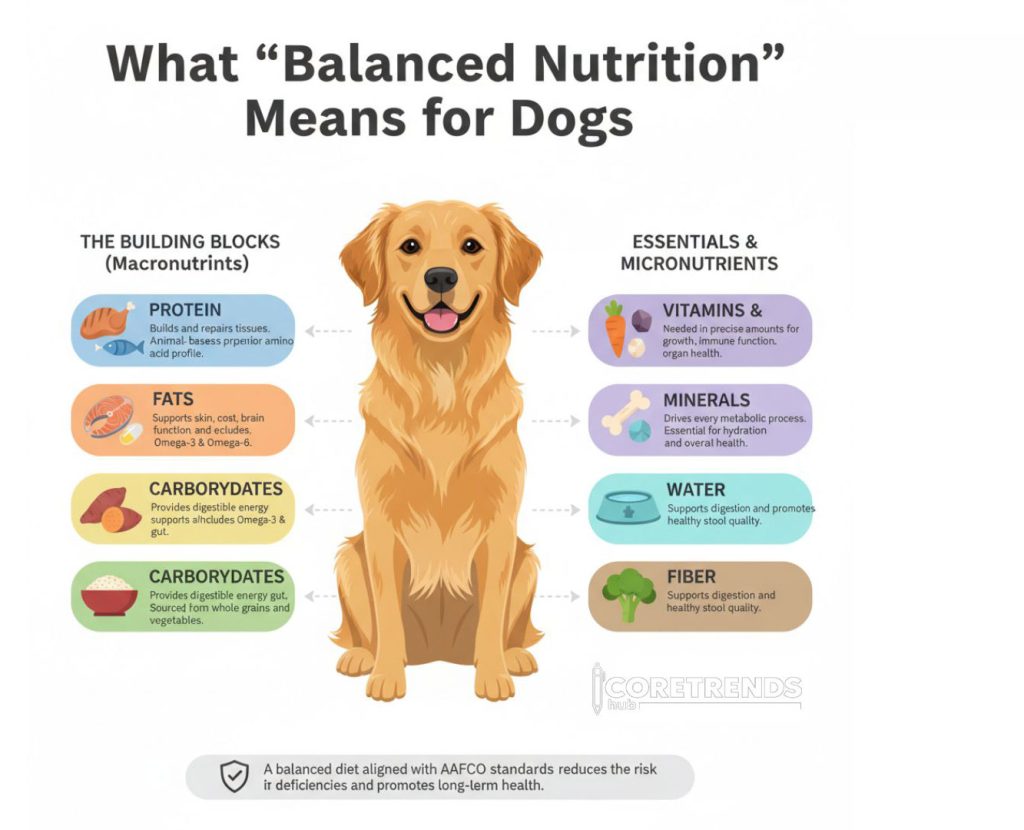
Balanced nutrition is built on meeting your dog’s needs for protein, fats, carbohydrates, vitamins, minerals, fiber, and water, all in specific ratios that match their life stage. Standards set by the Association of American Feed Control Officials (AAFCO) define what should be present in commercial dog foods. These guidelines help maintain growth, immune function, organ health, and metabolic stability. When your dog consumes a diet aligned with these standards, it reduces the risk of deficiencies or imbalances that often go unnoticed until symptoms appear.
The Building Blocks: Protein, Fats, Carbs
Protein is essential for building and repairing tissues, and experts at VCA Animal Hospitals recommend animal-based proteins for superior amino acid profiles. Healthy fats—including omega-3 and omega-6 fatty acids—support skin, coat, brain function, and energy. Carbohydrates, when sourced from whole grains or vegetables, provide digestible energy and help maintain a healthy gut. These three components form the nutritional backbone of your dog’s diet.
Vitamins, Minerals, Water & Fiber
Micronutrients complete the picture. According to Cornell University College of Veterinary Medicine, dogs need precise amounts of calcium, zinc, vitamin A, B vitamins, and others. Water drives every metabolic process, and fiber supports digestion and stool quality. These elements work together to maintain balanced metabolism, immunity, and digestive stability. Missing even one can cause long-term health issues.
Choosing the Right Feeding Approach
Choosing between kibble, canned food, raw diets, and homemade meals can feel overwhelming. Your decision should factor in your dog’s age, breed, activity level, digestion, allergies, and your own ability to manage preparation. The FDA’s pet nutrition guidance emphasizes that the most important thing is meeting nutrient requirements—not following trends. Each feeding approach has strengths when used correctly.
Kibble, Wet Food, and Hybrid Options
High-quality kibble formulated under AAFCO standards remains one of the safest, most reliable choices. Canned food offers hydration and enhanced palatability, which older dogs or picky eaters appreciate. A hybrid approach—mixing kibble with wet food—balances nutrition and cost while supporting hydration. No matter the choice, select products that include clear ingredient lists and a nutritional adequacy statement.
Raw & Homemade Diets: Risks and Rewards
Raw diets are popular but controversial. The American Veterinary Medical Association highlights risks such as bacterial contamination (Salmonella, E. coli) and nutritional imbalances. Homemade diets feel personal and loving, but research from Tufts University Cummings School of Veterinary Medicine shows that most DIY recipes are deficient in essential nutrients. If you choose raw or homemade feeding, consult a board-certified veterinary nutritionist to ensure accuracy.
Reading Labels & Regulatory Guidance
Understanding dog food labels empowers you to make safer decisions. AAFCO and the FDA set model regulations that manufacturers follow, but they do not test or certify products themselves. Instead, they define nutrient profiles, ingredient terms, and label requirements. Their guidance helps you see past marketing claims like “premium,” “gourmet,” or “natural,” which have no legal definitions.
AAFCO, FDA, and What “Complete & Balanced” Means
When you see “Complete & Balanced” on a package, it means the food meets AAFCO nutrient profiles either through formulation or feeding trials. This is one of the most important statements on the label. The FDA recommends looking for this phrase as a baseline indicator of safety and adequacy. Without it, the product may not support long-term nutritional needs.
Foods to Avoid & Simple Safety Rules
Some foods safe for humans are toxic to dogs. The ASPCA Animal Poison Control Center warns strongly against chocolate, grapes, raisins, macadamia nuts, onions, garlic, xylitol (found in sugar-free foods), and alcohol. Even small amounts can cause life-threatening reactions. Always store human food securely, keep trash covered, and avoid feeding table scraps that aren’t verified safe for dogs.
Common toxic foods include:
• Chocolate
• Grapes & raisins
• Xylitol
• Onions & garlic
• Macadamia nuts
Daily Feeding Routines & Portioning
A predictable routine helps regulate digestion and reduce mealtime anxiety. Most adult dogs thrive on two meals a day, though puppies require three to four smaller meals. Adjust portions based on weight, activity level, and veterinary recommendations. According to PetMD, rotating proteins every few months can diversify nutrients and reduce allergy risk. Fresh water should be available all day, especially for active or outdoor dogs.
Conclusion — Feed Well, Live Longer
Through years of trial, learning, and guidance from trusted veterinary resources, I’ve learned that nutrition isn’t just about feeding—it’s about preventive care. Choosing quality ingredients, understanding labels, and building consistent routines add years to your dog’s life. A mindful approach today means fewer health problems, more energy, and a stronger bond with your dog tomorrow. Feed with intention, and your dog will thrive.
FAQ — Quick Answers
Q: How often should I change my dog’s food?
Rotate proteins every 2–3 months but transition over 7–10 days.
Q: Are grain-free diets safe?
Not always. Some grain-free formulas have been linked to heart issues per FDA investigations.
Q: Can I add human food?
Only safe items (like cooked chicken, pumpkin, carrots). Avoid foods flagged by ASPCA Poison Control.
Q: Do dogs need supplements?
Only if prescribed. Over-supplementing can be harmful.