Why Cat Nutrition Is More Complex Than It Looks
When I first adopted my cat, I assumed feeding her was as simple as buying a “premium” brand from the store. I couldn’t have been more wrong. Over the next few years, I learned that small cat nutrition mistakes can quietly cause weight gain, digestive issues, urinary problems, and even behavioral changes. Cats are complex creatures with very specific nutritional requirements, and many common habits—like free-feeding or offering too many dry treats—actually work against their biology. With insights from organizations like the American Veterinary Medical Association and WSAVA Global Nutrition Committee, this guide helps you avoid the most frequent mistakes cat owners make and shows you how to feed confidently in 2025.
Table of Contents
Understanding What Cats Actually Need
Cats aren’t small dogs—they have entirely different nutritional needs. As obligate carnivores, they rely on high animal protein, moderate fat, and minimal carbohydrates. Their bodies evolved to thrive on moisture-rich prey, not dry, grain-heavy diets. According to the Cornell University College of Veterinary Medicine, cats require specific amino acids like taurine and arginine, which must come from animal sources. Understanding their natural physiology helps you choose food that supports longevity and prevents common health issues like kidney stress or urinary disease.
Obligate Carnivores Explained
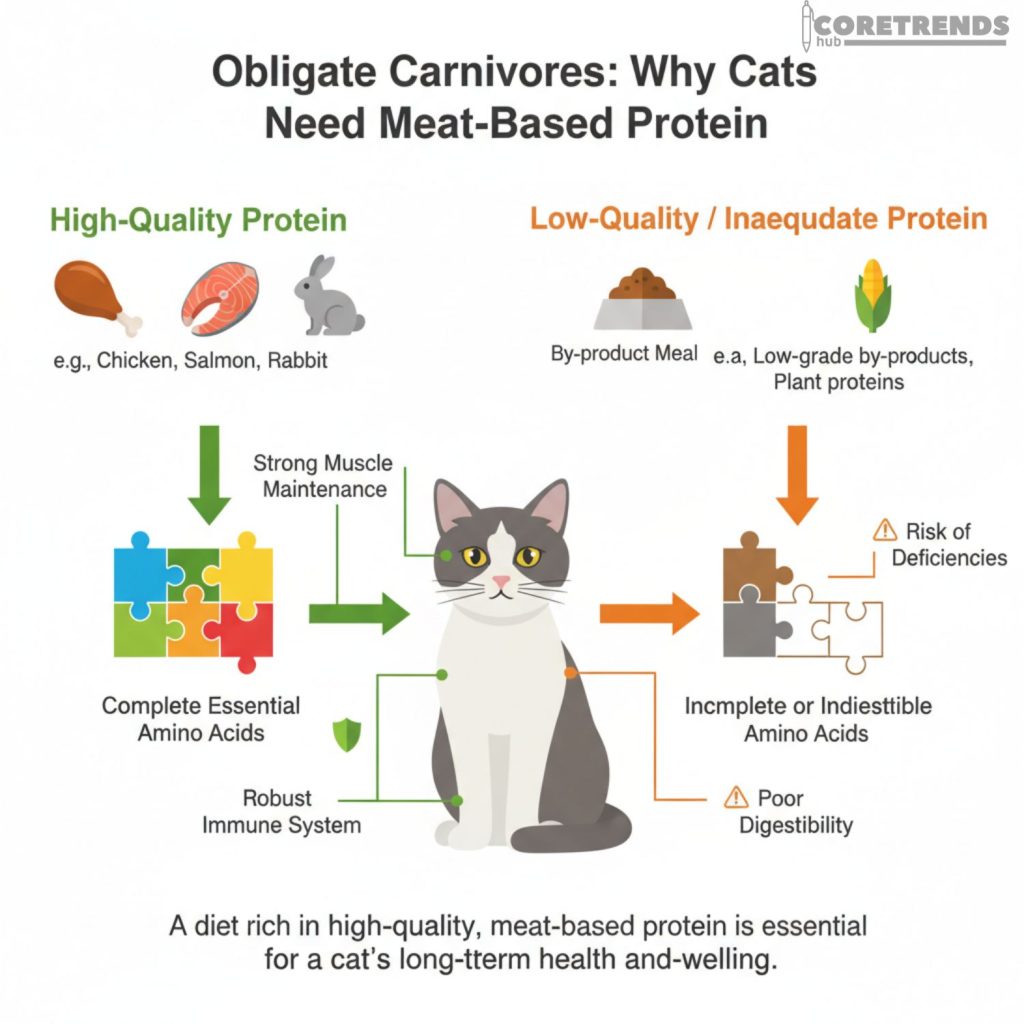
Cats depend on protein for almost all bodily functions: muscle maintenance, metabolism, immune response, and organ health. They cannot thrive on plant-based proteins. Veterinary nutritionists at Tufts University Cummings School of Veterinary Medicine emphasize that cats need diets rich in meat-based amino acids to avoid long-term deficiencies.
Protein Quality vs. Quantity
Not all proteins are equal. High-quality sources like chicken, turkey, salmon, or rabbit provide amino acids cats absorb easily. Low-quality by-product meals may meet minimum requirements but offer less digestible nutrition. Check labels for real meat ingredients first.
The Most Common Feeding Mistakes
Even well-intentioned owners make these mistakes because they seem harmless—but they can significantly affect your cat’s health over time. Subtle issues like weight gain, decreased activity, or urinary problems often trace back to daily feeding habits. Learning to spot and correct these behaviors can dramatically improve your cat’s long-term well-being.
Free-Feeding All Day
Leaving kibble out 24/7 is convenient, but it encourages overeating and increases obesity risk. The VCA Animal Hospitals note that controlled portions reduce digestive stress and maintain a healthier metabolism.
Feeding Too Many Carbs
Cats do not naturally process high carbohydrate levels. Heavy-carb diets can lead to weight gain and blood sugar fluctuations. Limit foods that list corn, wheat, or rice high on the ingredient panel.
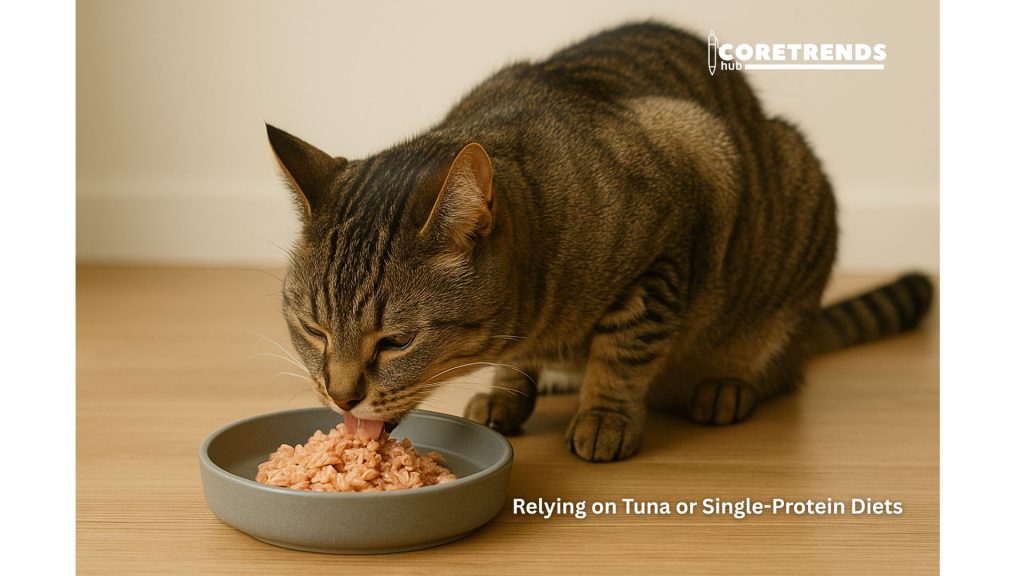
Relying on Tuna or Single-Protein Diets
Tuna is fine occasionally but not as a primary diet—it lacks crucial nutrients and may accumulate heavy metals. Feeding only one protein can also trigger intolerances or deficiencies over time.
Wet Food vs Dry Food — What Experts Recommend
There’s a long global debate about which diet is better, and the latest science leans heavily toward moisture-rich feeding. Cats naturally obtain most of their water from prey. Since many cats drink very little on their own, dry-food-only diets often contribute to dehydration and urinary issues. According to PetMD, wet food helps reduce kidney strain and promotes better hydration.
Hydration and Kidney Health
Chronic mild dehydration is common among cats and increases the risk of kidney and urinary diseases. Wet food supports natural hydration, helping maintain urinary tract health and overall energy.
Why Balanced Formulas Matter
Regardless of wet or dry, formulas should meet AAFCO or WSAVA standards. Avoid foods with vague labels like “meat derivatives” or “animal digest.” Look for specific proteins and a clear nutritional adequacy statement.
Reading Cat Food Labels Correctly
Cat food labels are designed to sell, not educate. That’s why learning to decode them is one of the most valuable skills for cat parents. Look beyond buzzwords like “holistic,” “premium,” or “natural”—none of which have legal definitions. Instead, focus on ingredient order, nutrient composition, and regulatory compliance verified through organizations like AAFCO and FDA Pet Food Safety.
AAFCO, WSAVA & Vet Guidelines
When a label says “Complete & Balanced,” it means the food meets AAFCO nutrient profiles. The WSAVA Global Nutrition Committee recommends checking if the manufacturer employs credentialed nutritionists and conducts feeding trials. These signals indicate higher product reliability.
Healthy Feeding Routines for Modern Cat Owners
Establishing a structured feeding routine not only prevents obesity but also reduces stress and improves behavior. Scheduled feeding allows better monitoring of appetite—one of the earliest indicators of illness. The RSPCA encourages dividing meals into two or three portions daily, supplemented with interactive feeding toys to stimulate natural hunting instincts. Consistency is key: predictable mealtimes create emotional stability for cats.
Conclusion — Feeding With Knowledge, Not Myths
After years of caring for cats, I’ve realized that nutrition is one of the most misunderstood aspects of pet ownership. The mistakes we make often come from love—but love needs guidance. When you understand your cat’s biological needs and rely on trustworthy veterinary experts, you can avoid common pitfalls and give your cat the long, healthy life they deserve. Feeding isn’t just routine—it’s a form of care, communication, and responsibility.
FAQ — Quick Answers for Cat Parents
Q: Is dry food bad for cats?
Not necessarily, but relying only on dry food increases dehydration risk. Mixing wet and dry is ideal.
Q: How often should I feed my cat?
Most adult cats do well on 2–3 meals per day with consistent timing.
Q: Is grain-free better?
Only if medically necessary. Grain-free diets are not automatically healthier.
Q: How do I know if my cat’s food is high quality?
Check for AAFCO compliance, clear ingredients, and label transparency.