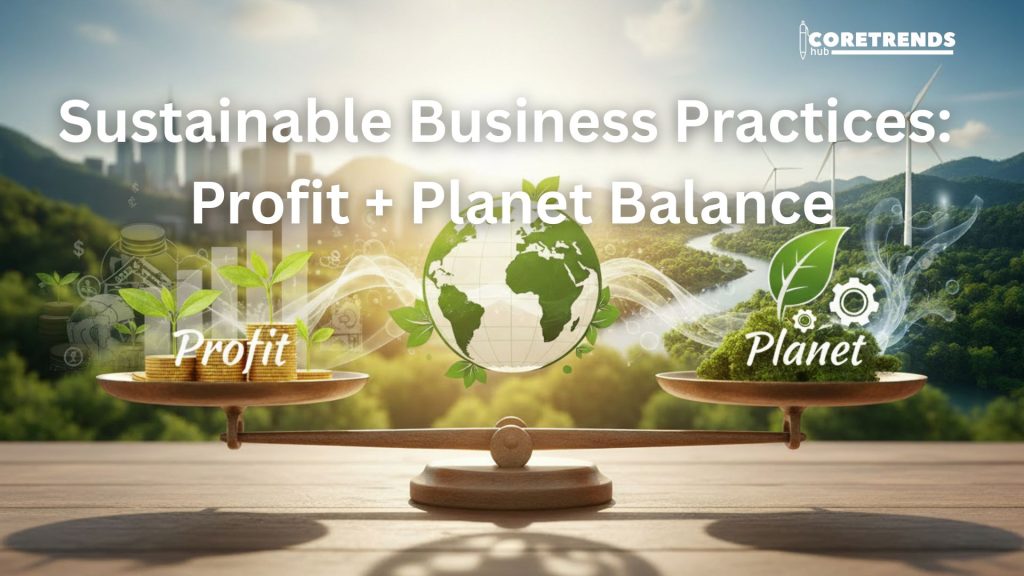
If you’re anything like me, you’ve probably wondered whether a business can genuinely grow fast and protect the planet at the same time. I used to think sustainability belonged mostly to big corporations with endless budgets. But once I dug deeper — and tested things myself — I realized something powerful: building a sustainable business is not only possible for startups, it’s actually a competitive advantage.
Today, I want to show you how you can build a business that scales responsibly, keeps customers loyal, and even saves costs — all while leaving the planet better than you found it.
Why Sustainability Is a Startup Superpower
Before I walk you through the step-by-step approach, let me tell you something upfront: when you infuse sustainability into your startup from day one, you build a foundation that becomes almost impossible for competitors to copy. Because it’s not “green branding.” It’s your identity.
Consumers today reward businesses that care. Investors, too — especially those following Environmental, Social & Governance (ESG) frameworks. Even hiring becomes easier when you operate with purpose because talented people want meaningful work.
But that’s not all.
The best part? Sustainable practices reduce long-term costs. Think energy efficiency, waste reduction, ethical sourcing, and circular workflows — each of these saves money while building brand trust.
Let’s dig into the steps.
Step 1 — Build a Purpose-Led Business Model
Before you design a product, choose your suppliers, or hire your first developer, you need clarity on why your business exists. This isn’t fluffy branding. Purpose directs strategy.
Your purpose should sit at the intersection of:
- Profitability
- Customer needs
- Environmental responsibility
When these three align, you create what researchers call a Triple Bottom Line (TBL) approach — focusing on People, Planet, Profit at the same time.
I personally use a simple method:
How to Define Your Sustainable Purpose
When I first started shaping a sustainability-driven business model, I asked myself three questions:
- What problem am I solving that genuinely improves people’s lives?
- How does my solution reduce environmental harm or regenerate value?
- Can this model scale profitably?
Once I answered these, my entire strategy became clearer — product decisions, branding, sourcing, and even pricing started aligning naturally. I encourage you to write your purpose in one sentence and place it where your team sees it every day. It becomes your compass.
Step 2 — Adopt Eco-Design Principles
Eco-design isn’t only for engineers or environmental experts. It simply means designing products or services with their entire lifecycle in mind. When you do this early, you avoid expensive corrections later.
What Eco-Design Looks Like for Startups
To give you a real example: when I helped a small digital product team create an eco-friendly subscription service, we applied the principles of Lifecycle Assessment (LCA) to understand where resources were being consumed and how emissions could be reduced.
Here are practical eco-design moves you can make:
- Choose sustainable materials with lower embodied energy.
- Reduce packaging by shifting to minimalist, recyclable designs.
- Design products for repairability instead of disposability.
- Shift digital products to energy-efficient servers and green hosting.
- Build modular, upgradable products so customers keep them longer.
These steps not only lower your carbon footprint, they also lower your costs and extend customer loyalty.
Step 3 — Choose Ethical and Circular Supply Chains
Your supply chain is where most environmental impact happens. Startups that ignore this suffer later — in cost, reputation, and regulatory compliance.
How I Evaluate a Supplier’s Sustainability
I always use this simple 5-point supplier check:
- Are they transparent about carbon emissions?
- Do they meet fair labor and human-rights standards?
- Do they practice resource efficiency?
- Are they willing to collaborate openly on improvements?
- Can their materials enter a circular economy loop?
A circular economy means your product (or parts of it) return to the system rather than ending in a landfill. Companies like Patagonia and Loop Industries use this brilliantly.
If your suppliers resist transparency, that’s a red flag — and a reason to shift to partners who align with your mission.
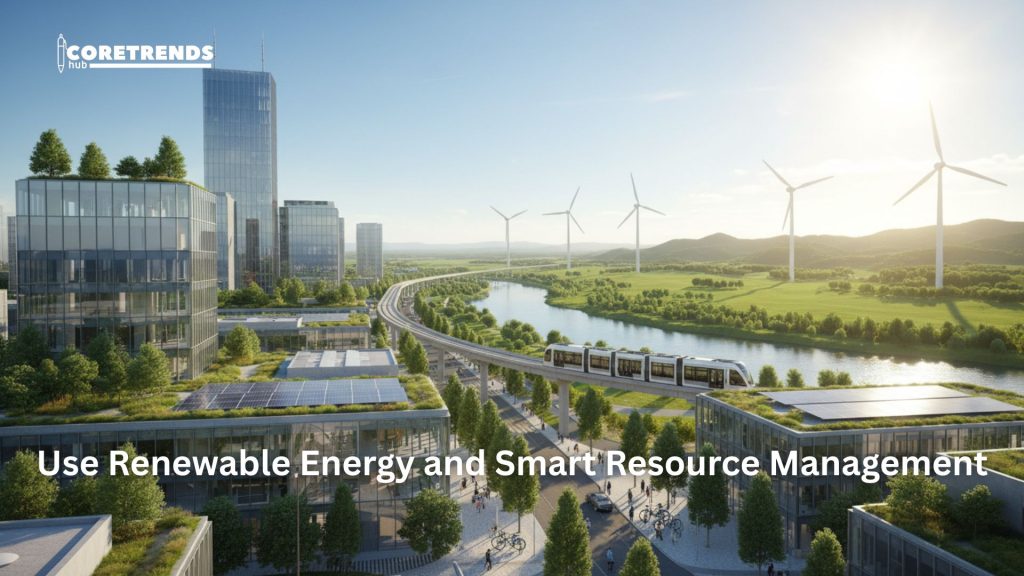
Step 4 — Use Renewable Energy and Smart Resource Management
This is where profits and planet meet beautifully.
Why Energy Strategy Makes or Breaks a Startup
When I moved my operations to renewable energy sources, the cost savings shocked me. Solar energy, LED lighting, energy-efficient equipment, and even remote work drastically reduced overheads.
For your startup, start here:
- Use energy-efficient hardware
- Switch to green hosting providers like GreenGeeks
- Install smart meters for real-time tracking
- Move to hybrid or remote teams to reduce travel emissions
- Use cloud-storage tools with lower energy loads
You’re not just saving the planet — you’re saving operational costs that can be redirected into growth.
Step 5 — Adopt Zero-Waste and Low-Waste Systems
Waste isn’t only environmental damage — it’s money evaporating. I once worked with a startup that reduced operational costs by 23% simply by applying a zero-waste workflow.
A Step-by-Step Zero-Waste Framework You Can Copy
- Map out every workflow generating waste.
- Categorize waste as avoidable, reducible, reusable, or compostable.
- Replace single-use materials with reusables.
- Create recycling stations accessible to your team.
- Track monthly progress using tools like Earth911.
- Celebrate improvement — small wins matter.
The beauty? Zero-waste systems often operate more efficiently than traditional ones.
Step 6 — Leverage Sustainability for Branding and Growth
If you do this right, sustainability becomes your startup’s strongest marketing asset — not a buzzword, but a promise your customers can feel.
How I Turn Sustainability into a Growth Engine
I focus on storytelling: showing customers the journey behind the product. People love transparency. When they see that you’re genuinely committed, trust grows naturally.
You can do this too:
- Share behind-the-scenes videos of your manufacturing.
- Publish your carbon footprint and track reductions publicly.
- Use certifications like B-Corp or Fair Trade to build credibility.
- Turn sustainability milestones into launch moments.
Customers today choose brands that stand for something. This is your edge.
Step 7 — Measure, Improve, and Maintain Transparency
Sustainability isn’t a one-off project. It’s a continuous journey. And what you track, you improve.
Tools I Recommend for Measuring Impact
- GHG Protocol for carbon tracking
- Sustainability Accounting Standards Board (SASB) for reporting
- Life Cycle Assessment (LCA) tools like SimaPro
- EcoVadis for supplier scoring
- UN SDG framework for aligning global goals
Share your progress — even when imperfect. Transparency builds trust faster than perfection.
Final Thoughts: The Future Belongs to Sustainable Startups
Every founder I mentor asks the same question: “Can sustainability and profitability scale together?”
My answer is always the same:
Not only can they — the strongest companies of the next decade will require it.
When you embrace sustainable business practices early, you build a company with resilience, trust, lower costs, and long-term relevance.
And the planet?
It simply becomes part of your business model — not an afterthought.
You and I live in a time when businesses are shaping the future. Building a sustainable startup isn’t just smart strategy… it’s leadership.
If you’re ready to build something that grows fast and leaves the world better — now is the perfect moment to start.
Conclusion
Sustainable business practices aren’t just a trend — they are the new blueprint for long-term success. When you blend profitability with responsibility, you create a company that grows with purpose, attracts loyal customers, and builds trust across every touchpoint. Every choice — whether it’s switching to renewable energy, redesigning packaging, or empowering ethical supply chains — becomes a step toward a business model that supports people, the planet, and your bottom line.
And the best part? Sustainability compounds. The more you integrate mindful processes today, the stronger and more future-proof your business becomes tomorrow. Profit and planet aren’t two separate goals anymore — they’re partners in how modern companies thrive.
FAQ / Q&A
Q1: Can small businesses really afford sustainable practices?
Yes. Many sustainable changes — like optimizing energy use, reducing waste, or switching to digital workflows — actually save money. Start small and scale gradually.
Q2: What sustainable practice has the biggest immediate impact?
Switching to renewable energy sources, reducing packaging, and improving supply-chain transparency usually offer the fastest environmental and financial returns.
Q3: How do customers react to sustainability efforts?
Studies show consumers increasingly prefer brands that demonstrate genuine environmental responsibility. Transparency builds loyalty and boosts brand reputation.
Q4: Are sustainability certifications worth it?
For many industries, yes. Certifications like B Corp, LEED, or Fair Trade provide credibility and open new market opportunities.
Q5: How can a company track sustainability progress?
Use sustainability dashboards or ESG reporting tools to measure carbon output, resource consumption, and waste reduction over time.